On September 15, 2026, HNYT dispatched two 2.5 ton mining electric locomotive units, one 5 ton mining electric locomotive and a batch of spare parts to a gold mine in South America. The order combines alternating underground haulage with a separate surface transport duty. With a relatively long overall transport route, the customer selected this arrangement to allocate locomotive capacity between production stages and reduce downtime associated with waiting for transport.
Equipment | Qty | Planned duty | Reference hauling load |
2.5 ton mining electric locomotive | 2 units | Alternating underground haulage | Approx. 20 tons per unit |
5 ton mining electric locomotive | 1 unit | Surface haulage | Approx. 40 tons |
Spare parts | 1 batch | Supplied with the locomotives | Not applicable |
The 2.5 ton and 5 ton figures identify locomotive weight, not the weight of ore carried. The approximate hauling loads are selection references and require confirmation for the intended route. The two underground units are planned for alternating duty; their individual reference loads do not describe a single combined train capacity.
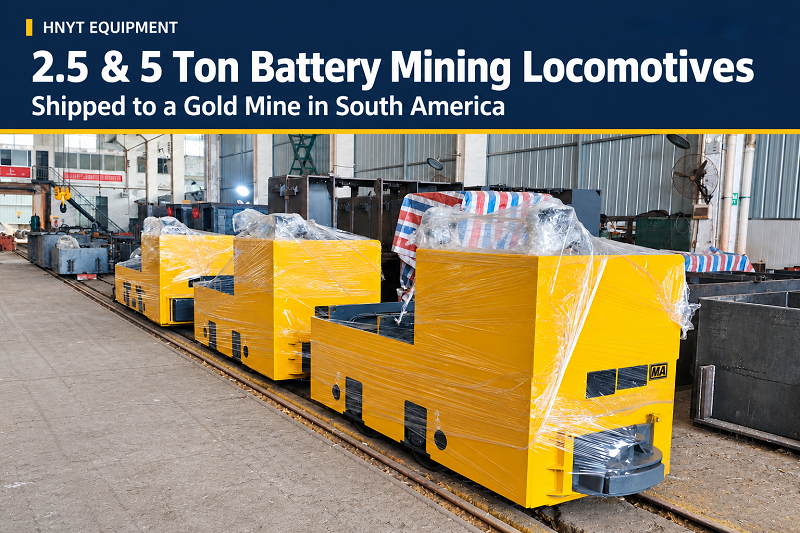
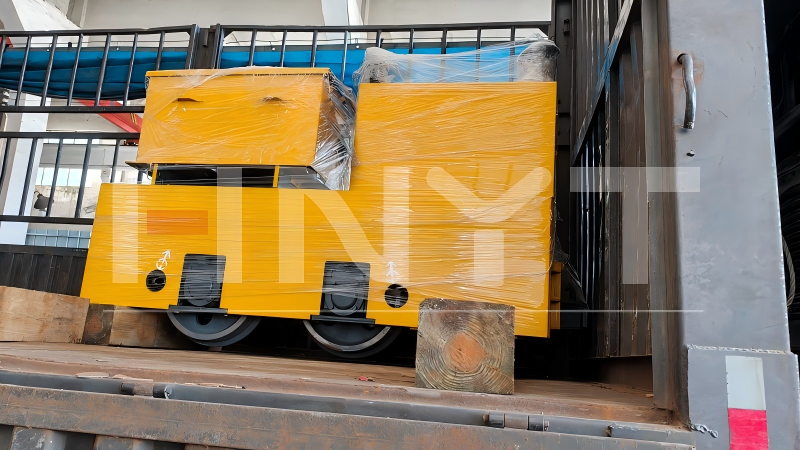
The locomotives were prepared together in the workshop for this overseas order. Photographs show the three yellow units positioned on rails, with protective stretch film around their bodywork and wrapping over exposed upper components. The wider workshop view also shows separate yellow equipment boxes arranged beside the locomotives before loading.
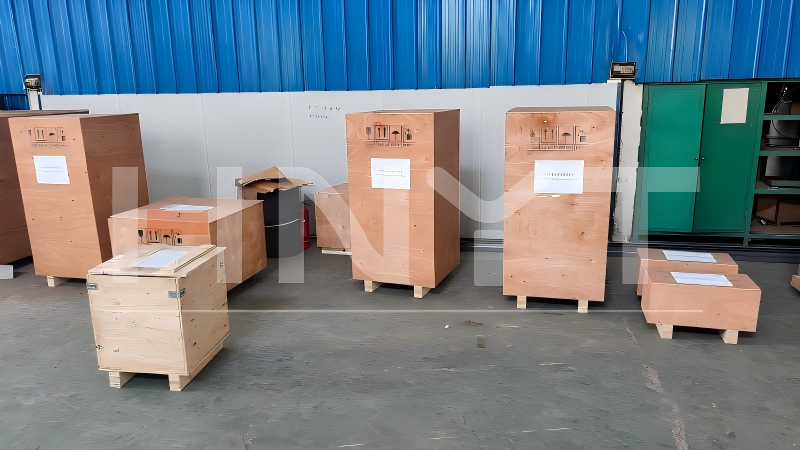
The accompanying spare parts were packed in wooden cases, with identification labels attached to the outside. Handling symbols are visible on the cases, including upright and keep-dry markings. Packing the parts separately gives this shipment a clear distinction between the complete locomotives and the accompanying packages shown in the dispatch photographs.
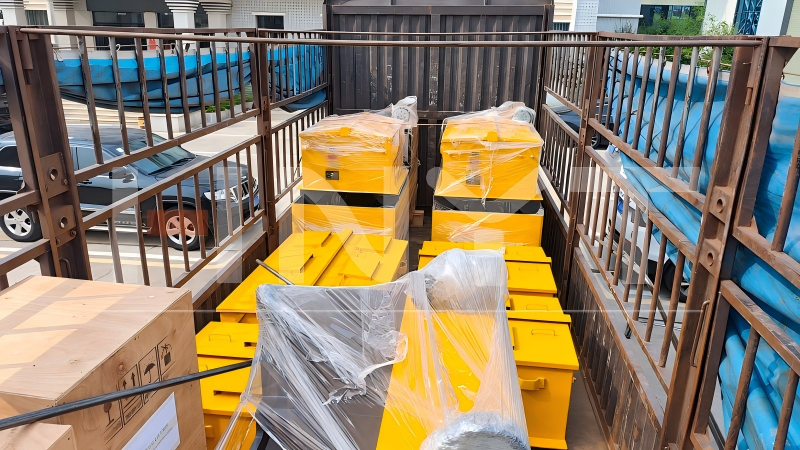
The loading views show the wrapped locomotives on the delivery truck, with yellow equipment boxes and wooden cases arranged on the same truck bed. In the side-view photograph, wooden blocks are visible beside the locomotive wheels. The workshop and truck photographs provide a record of this order’s preparation and loading for shipment to the South American gold mine.
For this customer, the selection starts with how transport is divided across the mine. The two 2.5 ton units are assigned to underground service and will alternate their transport duties. That arrangement is intended to limit waiting between transport cycles along the mine’s longer overall route, rather than relying on one underground mining locomotive to handle every movement.
The 5 ton unit has a separate surface role and a higher reference hauling load than either smaller locomotive. Its allocation keeps surface transport distinct from the alternating underground duty. Together, the three locomotives form a mine battery locomotive arrangement matched to different production stages. The objective is to distribute the required haulage capacity where it is needed; on-site performance will depend on the customer’s operating conditions and scheduling.
· 2.5 ton battery powered mine locomotive specifications
· 5 ton battery powered mine locomotive specifications
· Battery powered mine locomotive range
· Related news: 2.5 ton mining battery locomotive spare parts shipped overseas
For a2.5 ton mining electric locomotive and 5 ton haulage arrangement, review the product specifications above and send HNYT your required quantity, track gauge, route length, gradients, intended hauling load and shift schedule. Identify the underground and surface duties so we can discuss locomotive selection and prepare a quotation.